Blog

  • Stress – Affecting Productivity at Work

    Stress – Affecting Productivity at Work

    Stress – Affecting Productivity at Work. We all experience it at some point. Some more than others, and some more acutely than others. For many people, a certain amount of stress is important in order for them to remain focused and determined to achieve. For others, even small amounts of stress can have a negative impact on their productivity – stress can lead to panic and unstructured working. Mistakes are made so simple tasks take longer to complete. And then, for some, prolonged stress can ultimately cause illness, which often puts an end to anything being achieved at all.

    Whilst individuals have a major role to play in ensuring that they don’t overdo it and let stress get the better of them, it’s not always possible for people to step back sufficiently from stressful situations in order to take stock, become aware of their escalating stress levels, and make the necessary changes. By definition, people who are stressed at work are those who feel they are struggling to manage, for whatever reason. Perhaps they have important work deadlines to meet, or they want to impress a new boss, or fear for their job security so don’t want to admit defeat. These people are the least likely to step back from their work voluntarily, appraise the situation, and take the necessary action (i.e. slowing down and admitting that they can’t manage everything). Staff who are dealing with difficult issues outside of work often have less resilience to cope with problems and challenges at work.

    So, it’s down to managers and employers to step in, where necessary. But many managers and employers question how they can support employees to help them keep on top of their own health and wellbeing whilst they’re busy grappling with the issues that are often most important to them, such as productivity, profitability and remain competitive. But the fact is that if staff are feeling stressed and pressured, they probably aren’t working to the best of their ability, so it’s of no benefit to organisations for staff to be pushed to their limits, and beyond. Customer service and productivity may well drop, and mistakes and discontent may increase – and this certainly isn’t what organisations should be aspiring to.

    Good communication within the workplace is essential to ensure managers recognise and are quick to put measures in place for those who are struggling.

    Call FITMed24 to set up staff medicals to help manage the negative effects of stress. 
  • Three Benefits of doing Employee Medicals?

    Three Benefits of doing Employee Medicals?

    Employee Medicals have the potential to benefit both employees and the organisations they work for:

    • They offer lasting benefits to employees. A worker may be helped to overcome a niggling health problem or the tests may capture potentially more serious health issues early when they are easier to treat.
    • Lifestyle advise and support (e.g. advice about smoking cessation) can reap long-term life-enhancing benefits.
    • An organisation would benefit from supporting the health and wellbeing of the workforce, with the potential for lower levels of sickness and absenteeism. Fitter workers may also concentrate better and have higher levels of productivity too.

    An organisation’s workforce is its most important asset, so it makes sense for managers to do what can be done to detect illness and promote health and wellbeing. And keeping employees healthy and productive arguably makes sound financial sense. There are a number of different forms of employee health screening, including:

    • Full physical examination
    • Vision test
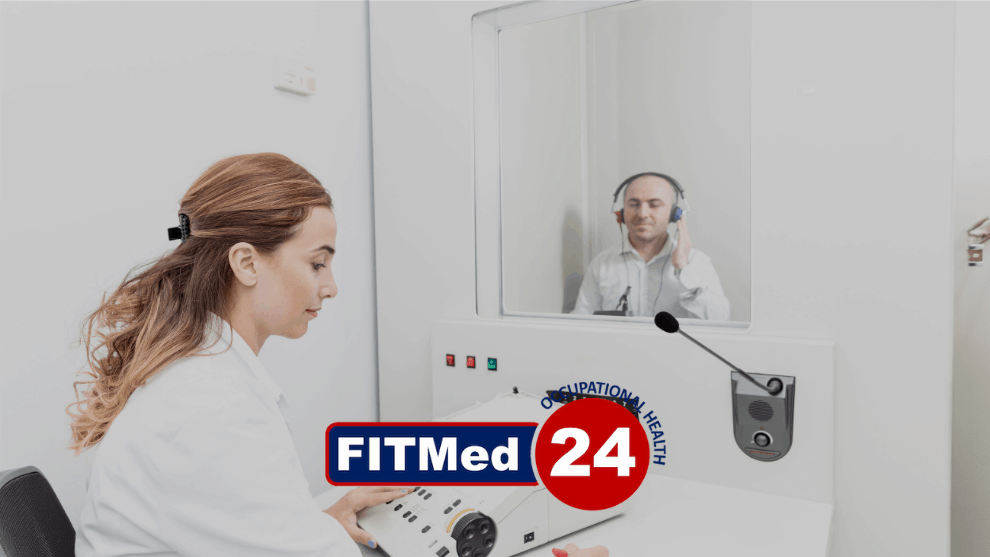
    • Audiometry test
    • Spirometry test.

    Full Physical Examination comprises of a combination of tests, which aim to give an individual a general overview of their health status and help to detect disease or risk factors early. Any issues can then be followed up with a GP, which is important as many people may suspect that they have a health issue but have not undergone medical tests. 

    The World Health Organisation (WHO) identifies eight key risks factors to health, all of which could be addressed in a health check:

    • Smoking.
    • Drinking alcohol.
    • Obesity.
    • High blood pressure.
    • High cholesterol.
    • High blood glucose.
    • Poor diet.
    • Lack of exercise.

    Medicals are provided as part of occupational health provision but should always be carried out by trained professionals who can offer good advice on the next steps, as necessary. Furthermore, employees should be reassured that the results of tests will remain confidential.

    Any group screening should also involve a report to the organisation with health trends across the workforce, average levels of health and fitness compared to national averages, etc. so that the company can review its working practices and use the information to improve the working environment.

    There are a number of possible approaches to health checks, Clinic Medicals or the use of the mobile medical facility. Organisations should choose the best option for them based on a number of factors, e.g. the size of the organisation, cost implications, the type of business and the pattern of work of employees. 

    Employee Medicals offer a variety of benefits both for organisations and the individuals who work for them.

    Benefits to individuals:

    • Access to health information.
    • Reduced health risks.
    • Improved performance.
    • Better mental health.

    Benefits to organisations:

    • Reduced sickness absence levels.
    • Greater staff satisfaction.
    • Reduced turnover of staff.
    • Improved productivity.
    • Improved morale and loyalty amongst employees – health screening demonstrates that employers care about their staff and are dedicated to helping them stay healthy.
    • Improved team-working.

    Trust FITMed24 with your Employee Medicals

  • Medical Tourism Facilitation

    FITMed24 will facilitate your journey to South Africa whilst you undergo your medical procedure or treatment. FITMed24 has facilitated individuals, corporate company CEO’s and Government delegates in South Africa since 2008 for various medical procedures and treatment. Our facilitators attend to airport collection, transportation, accommodation in select upmarket venues, hospital and clinic admission and discharge administration. Professional nurses will be assigned for your post-surgery care and recovery.

    FITMed24 can also provide you with information about recommended surgeons and top medical care facilities in South Africa so you can make an informed decision regarding the facility and surgeon you would like to utilise for your type of medical procedure or treatment.

    (more…)

  • On Site Clinic Management

    We are able to provide in-house clinic management services for our customers. Professional occupational or primary healthcare nurses and Occupational medical practitioners are placed within the organization to effectively manage our customer’s occupational health programs or even design these programs for the client.

  • Why is workplace safety important and why ? – Noise pollution

    Why is workplace safety important and why ? – Noise pollution

    Excessive noise levels over a long period of time will damage your hearing. This may happen so gradually and painlessly that you may not notice the minor deterioration from one day to the next. Excessive noise in the workplace presents a risk of hearing damage and other health problems.

    The parts of the ear that process high frequency sounds are usually the first to be affected. The degree of hearing loss depends on the loudness of the noise and how long you are exposed to it. Sudden explosive sounds, such as gunshots, can cause immediate damage. 

    Some people exposed to excessive noise develop tinnitus, which is described as a constant ringing sound. For most cases of noise-induced hearing loss, there is no cure. Hearing aids only amplify sounds and can’t replace normal hearing.

    Associated effects of constant noise pollution

    Apart from damage to hearing, exposure to constant and excessive noise can cause other health problems including:

    • headache
    • elevated blood pressure
    • fatigue
    • irritability
    • digestive disorders
    • increased susceptibility to colds and other minor infections.

    Dangerous decibels

    The loudness of noise is measured in decibels. Sensitivity to noise differs from one individual to the next, but experts believe that damage to hearing occurs when noise levels are higher than 85 decibels, which is about the loudness of heavy traffic. 

    The risk of hearing loss increases as the noise becomes louder. Length of exposure is important too. For example, it is not recommended to listen to noises of 109 decibels for any longer than two minutes at a time. 

    If you have to raise your voice or shout to be heard, or if your ears ring or sounds seem muffled afterwards, then the noise level was too loud and harmful.

    Reducing noise pollution in the workplace

    Noise levels can be measured using a sound level meter, which detects the pressure of sound waves as they move through the air. 

    Reducing exposure to excessive noise in the workplace can be accomplished in many different ways: 

    • Change or modify equipment.
    • Locate the equipment in a more isolated area, or soundproof the room.
    • Make sure that people spend time working in quiet areas too.
    • Try to run noisy equipment early or late in the day when fewer people will be exposed.
    • Use personal hearing protection such as ear plugs or ear muffs.

    Medical Surveillance

    The employer needs to establish and maintain a system of medical surveillance of all employees exposed at or above the noise-rating limit. They must ensure medical surveillance programme:

    • Consists of a baseline audiogram which is recorded before and employee commences or with 30 days of employment. 
    • Periodic audiogram completed at least annually for all employees, and employees working in noise exposure zones where the exposure equals or exceeds the 105 dB(A) 6 monthly.
    • Exit Audiogram for employees moved or left employment.
    • Tests must be performed by a competent person, such as FITMed24.

  • Responsible Person Crisis Management Training Certificate

    Responsible Person Crisis Management Training Certificate

    With the development of the “Responsible Person Crisis Management Training Certificate,” it gives businesses and their employees to deal with the COVID-19 virus in the workplace. Our employees are the first and last point of contact when entering and exiting a facility. These officers are most vulnerable to contracting viruses through people they come into contact with on a daily basis.
    The Department of labour has appealed to employers who have not prepared for pandemic events to prepare themselves and their workers as far in advance as possible of potentially worsening COVID -19 outbreak conditions. The Department advises employers to “go back to basics” by conducting a hazard identification and risk assessments to determine the level of risk exposure and communicate these steps to all workers. 
    FITMed24 will be running a workshop for security officers responsible for the roll-out of COVID-19 protocols for their organizations

    The Responsible Person Crisis Management Training Certificate course content covered is as follows: 

    1. Understanding Coronaviruses
    2. What is known about the Coronavirus
    3. Origins of the virus
    4. Transmission of respiratory diseases in the workplace 
    5. Who is most affected?
    6. Symptoms of the virus to look out for 
    7. Infection gateways
    8. Making the workplace a sterile zone
    9. Self-awareness and decontamination practices
    10. The minimum PPE requirement for front line employees
    11. Dangers to employees with existing diseases
    12. Implementing pedestrian and drive through choke points in the workplace to minimise the Risk
    13. Enforcement of decontamination procedures
    14. Decontamination of Vehicles in a designated open area
    15. Daily toolbox talks
    16. Crisis Management
    17. Onsite medical Intervention
    18. What is a Crisis Communication Plan?
    19. Crisis Communication Strategies
    20. Case Escalation
    21. Isolation and the Designated Isolation Area
    22. Social Media Response

    Don’t put your business at risk during the pandemic that has hit the world and visit FITMed24 Online Training Centre and get your Responsible Person Crisis Management Training Certificate today. It is free of charge for a specific period.

  • Occupational Medical and the Law

    Occupational Medical and the Law

    “Do we have to do it?”

    YES!

    “The Occupational Health and Safety Act 85 of 1993 applies to everyone in South Africa, who is working. The application of the Act is not limited to factories, manufacturing plants and construction sites. Occupational medicals are equally not limited to those working in workshops, manufacturing plant and construction sites, and it applies to all working environments.

    “As Employers, what do we have to do?’

     It is the employer’s duty to provide and maintain a working environment free of risk to the health and safety of employees. Remember, this includes all employees, even where the workplace risks and hazards may not be so evident or obvious.

    “What does the law say?”

     Section 8 (1) of the Occupational Health and Safety Act mentioned above set the following requirement:

     “General duties of employers to their employees 

     (1) Every employer shall provide and maintain, as far as is reasonably practicable, a working environment that is safe and without risk to the health of his employees”.

     Section 9 of the Act set the following requirement:

     “General duties of employers and self-employed persons to persons other than their employees

     (1) Every employer shall conduct his undertaking in such a manner as to ensure, as far as is reasonably practicable, that persons other than those in his employment who may be directly affected by his activities are not thereby exposed to hazards to their health or safety”.

     “What about Occupational medicals?” 

     As employers, it is our duty to look after the health & safety and wellbeing of all employees employed by ourselves.

     An employee working in an office or on the road might not be exposed to the types of hazards that an employee is exposed to in a mechanical workshop. Yet an office can be full of hazards, for example, electrical outlets, administrative equipment and slippery floors, being on the road travelling have many, many hazards and inherent dangers. All employees need to be medically fit, both physically and psychologically for the job and type of work they employed to do. An employee may not be aware of a medical condition they might have or could develop later that could be a risk within the workplace.

     A programme of regular medicals is a good way of protecting oneself against any possible legal liability suits. The cost in prevention far out ways the possible consequences of not doing it.

     “There are different types of medicals?”

    • Pre-employment medical
    • Annual occupational medical 
    • Exit medicals 

    These should all form part of your employee health 

    monitoring programme.

     “So anybody can do these medicals?” – NO!!

     Only a registered Occupational Medical Practitioner with the Health Professions Council may conduct such medicals. This is a requirement in terms of Section 17 of the Health Professions Act 56 of 1974.

    “Where do I start and who can help me.”

    Contact us at FITMed24.com.:

    Phone us 010 023 4087 or 072 259 8069

    Email:  helpdesk@fitmed24.com

    Visit : Contact Page

    We have qualified medical professionals, experienced in the provision of monitoring, screening, and exit medical testing services. We offer our services to organisations in various industries, ranging from mining and construction to pharmaceutical, chemical and processing plants. Whether you operate within the aviation, medical, chemical or mining sector, we understand and apply the right protocols to ensure that your employees meet the exiting medical requirements. Our team can evaluate your firm’s specific site risks and assist in designing the set of protocols for protection, prevention and monitoring of employee health, including the completion of exit medicals.

    Ensure full compliance with labour and occupational health laws of South Africa and minimise risk to your firm. Make use of the services as offered by FITMed24 to ensure accurate and compliant exit medicals. 

    Note that the above information is provided for informational purposes only and should not be regarded as legal or medical advice.

  • What is Occupational Health & Safety

    What is Occupational Health & Safety

    An Overview of Occupational Health and Safety in South Africa

    While the potential dangers to which some workers were exposed when performing their designated tasks were recognised even by the ancient Greeks and Romans, attempts to protect them from such hazards were limited by the technology of the times. Even with the knowledge of such dangers, it was many centuries before any occupational health and safety regulations that were intended to protect those employees who are exposed to workplace hazards were eventually introduced into law. Today, the employers in most of the industrialised nations are now bound by such legislation.

    It was during the First World War years that the South African government first expressed its concern regarding the high rate of serious injuries in the workplace, which led to the Factories Act of 1918. It was later replaced by the Factories, Machinery and Building Work Act of 1941, imposing certain responsibilities and duties on those who used machinery, occupied factories, or undertook building projects. Today, the occupational health and safety requirements with which local employers are required to comply are both stricter and more far-reaching, following the introduction of a new act in 1993.

    Other, more industry-specific acts followed detailing safety requirements for mines, railways, civil aviation, and maritime occupations followed during the course of the next two decades. In essence, the legislation these various acts introduced placed the onus on employers to take steps to provide a safe working environment. To do so, a workplace assessment must be performed by an accredited occupational health and safety professional to identify any potential hazards; evaluate the extent of the risk these may pose; review the effectiveness of current precautionary measures, and to recommend any improvements that may be deemed necessary. The employer is then given sufficient time to act on those recommendations before a further assessment is conducted.

    During an occupational health and safety assessment, attention may be paid to physical, chemical, biological, and even ergonomic hazards. Physical threats might include noise, vibration, or radiation, depending on the workplace activities, while water and air sampling may be required to identify harmful chemicals or microorganisms where appropriate.

    Somewhat surprisingly, perhaps these acts do not mandate medical examination of those workers who routinely operate in potentially hazardous conditions. However, it is in the interest of employers to see that workplace medicals are made available to them. Like the inspections, these can only be undertaken by personnel who possess a recognised occupational health and safety qualification. So, why should these examinations be considered important?

    Where risks are known to exist, even though precautions are in place, conducting regular staff medicals can offer reassurance that these are adequate, and that staff are actually complying with them. Also, when reviewing applicants for a physically demanding or specialised occupation, this can help to determine whether a candidate meets the physical requirements of the job in addition to possessing the necessary skills and experience.

    Monitoring the health of employees is not only in their best interest, but it is also a good business decision. Implementing staff medicals as a part of the company’s occupational health and safety programme can help to ensure a healthy, productive workforce while also serving to minimise the risk of crippling industrial compensation claims. Talk to FITMed24 about how best to ensure the health of your workers.

  • THE VALUE OF OCCUPATIONAL MEDICALS

    THE VALUE OF OCCUPATIONAL MEDICALS

    EXPLORING THE VALUE OF OCCUPATIONAL MEDICALS

    While most people will only pay a visit to their doctor when they are in pain or feeling unwell, others tend to favour a more pre-emptive approach in which they choose to book a more in-depth physical check-up once or twice a year, a sort of roadworthy test for the body. There is a lot to be said for the latter approach, a fact that is made apparent by the growing tendency among employers to arrange for their staff to undergo occupational medicals.

    These, however, are not the sort of routine examinations typically conducted by a general practitioner. In practice, they may only be carried out by personnel who have undergone the appropriate training and have obtained a recognised qualification in the field of occupational health. Those involved include physicians, nurses, and other healthcare professionals. Often, a small company will rely on a suitably qualified nurse and a part-time doctor to provide its occupational medicals, while larger companies will tend to prefer the support of a specialist organisation to conduct such services.

    In addition to fielding staff with the appropriate qualifications and accreditation, one of the most important requirements for these companies is to have in-depth knowledge and experience of a wide range of industries and the tasks associated with them. Although all of the examinations they perform will have many features in common, certain activities require unique physical qualities that will need to be evaluated. This is precisely why these examinations are known as occupational medicals and why they should only be carried out by those with the relevant knowledge.

    In most cases, these examinations can be carried out on the employer’s premises and should not result in any significant interruption to the normal flow of work. A reputable service provider is certain to have a mobile facility to ensure that the bulk of the tests considered relevant to any given industry can be completed on-site without calling upon its external facilities.

    Among the investigations common to all occupational medicals are blood pressure measurements and a variety of routine blood and urine tests. Where necessary, these will be further supplemented by more specialized examinations, such as X-rays, ECG, spirometry, audiometry, evaluation of vestibular function, and any others that may be seen as directly or indirectly relevant to a given subject’s fitness to perform his or her designated tasks.  

    Occupational medicals are a form of insurance, not just for employees, but also for employers. A healthy workforce is a productive one and, when an employer is seen to show concern for his or her workers’ health, this is a surefire recipe for inspiring loyalty and boosting internal relations, as well as reducing costly staff turnover.

  • The Evolutionary Benefits Of Occupational Health

    The Evolutionary Benefits Of Occupational Health

    The Evolution of Occupational Health and Its Valuable Benefits

    While most of us tend to believe that concerns over matters, such as sanitation, safe working conditions, and occupational health, are all products of our modern civilisation, each of these has its origins in the distant past. There is abundant archaeological evidence to support this, dating back almost 4 000 years. At the same time, concerns over the impact of work on health were already being addressed by icons, such as the Greek physician, Hippocrates, who recognised the importance of clean air and water, and Galen, an official physician to Rome’s gladiatorial combatants.

    Over the centuries, others have seen the need to provide workers with various forms of protection, such as masks to limit the inhalation of dust particles. However, only with the vastly improved understanding of illness and its multiple causes did the evolution of the advanced occupational health services we enjoy today become possible. 

    However, before any effective preventative measures could be introduced, it was first necessary to develop the technology with which to do so. Consequently, while concerns over the appalling living and working conditions to which workers were subjected had become widespread by the middle of the nineteenth century, it took almost another century before anything remotely resembling the services provided by the doctors, nurses, and other therapists responsible for occupational health today finally became available.

    At this time, in fact, the emphasis was more on workplace safety, such as the prevention of injuries and limiting the risks posed by hazards, such as toxic chemicals and dust particles in the air, rather than actually examining workers for evidence of illness that might have been caused by factors within the working environment. Only in 1983, when the government of South Africa passed legislation covering safety in the workplace, did similar concerns for occupational health begin to translate into positive action. 

    Though necessary, the training of technical experts to inspect factories and other businesses for possible hazards and to evaluate or provide advice about suitable protective measures became just one part of a two-part initiative. The second was to train medical personnel, including doctors, nurses, and other therapists, to conduct specialised examinations for evidence of work-related illnesses. This role has gradually become extended and, today, these occupational health specialists are also called upon to assess the physical suitability of employees to undertake certain tasks to determine whether workers are fit to return to work following an accident or injury.

    In addition, these specialists are often called upon to check on the medical status of employees at the time of joining a company and when retiring or resigning their posts. This provides the means to preclude any condition that might lead to a claim for worker’s compensation. When examinations of those known to be at risk are carried out at regular intervals, it allows early detection and treatment of any problems detected, whether work-related or not. 

    Arranging for staff to undergo periodic examinations by occupational health physicians and nurses is clear evidence of concern on the part of an employer, an observation that can help to boost morale and, in turn, productivity. If you would like to be sure that your workforce is healthy, happy, and productive, why not give FITMed24 a call?